
I didn’t plan to fall in love with a cookie at a Korean restaurant. My friend had dragged me there for a birthday dinner, insisting I try everything on the table. I was happy to oblige — the banchan alone had me convinced this was going to be a good night. But then the server set down a small plate of these dark golden, flower-shaped cookies at the end of the meal, and everything else kind of faded out.
They were dense but not heavy. Sweet but not cloying. There was this deep, almost caramel-like honey flavor underneath, and something floral and warm that I later figured out was the sesame oil and ginger working together. The outside had the faintest crunch, and the inside was almost chewy. I ate three before I even thought to ask what they were.
Yakgwa. I’d never heard of them. The server explained they’re a traditional Korean confection, usually made for holidays and celebrations. Hundreds of years old. I went home that night and immediately started researching. Tried my first batch two weeks later. It took a few attempts to get the texture right, but the moment they clicked I knew I’d be making these forever.
The good news is that they’re actually not hard once you understand what you’re doing. The ingredient list is short and the process is straightforward. What matters most is the oil temperature and not overworking the dough. I’ll walk you through everything.
A Few Things Before You Start
Yakgwa are deep-fried, not baked. I know that might feel a little intimidating if you don’t fry things often, but it’s genuinely one of the more forgiving frying projects I’ve done. The dough holds its shape well and doesn’t fall apart in the oil.
The sesame oil is not optional. I’ve seen recipes that suggest you can swap it out for a neutral oil to save money. You can’t, not really. The sesame oil is what gives yakgwa that distinctive warm, slightly nutty aroma. Without it, you’ve got a honey-flour cookie that doesn’t taste like much. Trust the sesame oil.
The rice wine (also called rice wine or mirin, sometimes makgeolli for a more traditional approach) helps the dough come together and adds a very subtle fermented depth. If you genuinely can’t find it, dry sherry works in a pinch. But most Asian grocery stores carry it easily.
Don’t rush the kneading, and don’t overdo it either. You want the dough to be smooth and pliable, not tough. Overworked dough leads to cookies that come out hard instead of that signature chewy-tender texture.
Finally, let the cookies cool fully before you eat them. I know. It’s hard. But warm yakgwa are soft and a little greasy, and they need that resting time to set up properly. Fifteen minutes of patience makes a real difference.
Ingredients
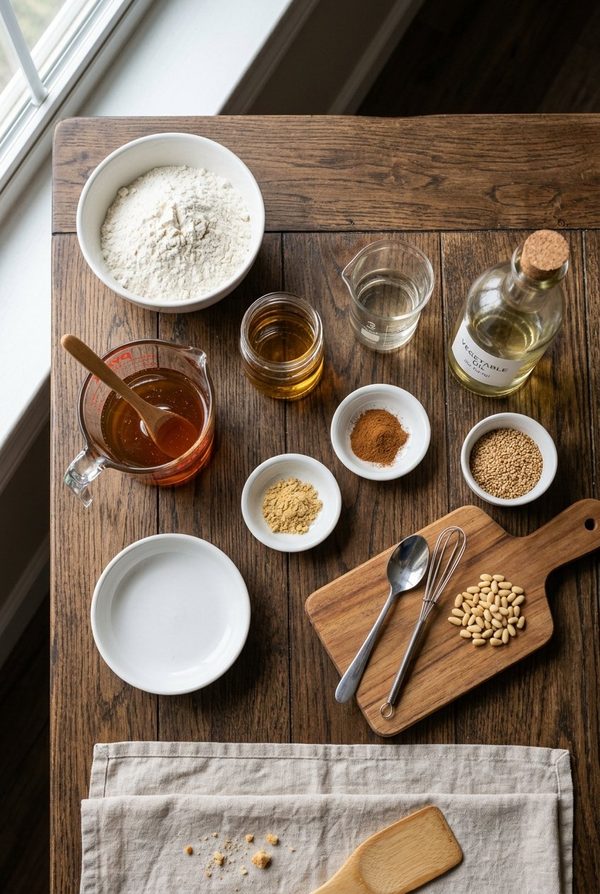
- 3 cups all-purpose flour
- 1 cup honey
- 1/2 cup sesame oil
- 3 tablespoons rice wine
- 1/2 teaspoon cinnamon powder
- 1/2 teaspoon ginger powder
- Vegetable oil, for frying
The Method
Step 1: Make the honey mixture. Add the honey, sesame oil, cinnamon powder, and ginger powder to a large mixing bowl. Whisk everything together until fully combined. The sesame oil and honey don’t want to blend at first, so give it a solid minute of whisking. You’re looking for a smooth, uniform mixture before you add anything else. Some recipes skip this step and just dump everything in together, but taking the time to mix the wet ingredients first means the spices distribute evenly through the dough.
Step 2: Add the flour. Pour in the rice wine and stir it into the honey mixture. Then add the flour about a cup at a time, stirring after each addition. The dough will look shaggy and rough at first. Keep going. By the time the third cup of flour is in, it should be pulling away from the sides of the bowl and coming together into something that looks like actual dough.
Step 3: Knead until smooth. Turn the dough out onto a lightly floured surface and knead it for about three to four minutes. You’re not trying to build gluten here the way you would with bread, so don’t go aggressive. Just fold and press, fold and press, until the surface is smooth and the dough feels elastic when you push into it. If it’s sticking to your hands, add a tiny bit more flour. A quarter teaspoon at a time, not a handful.
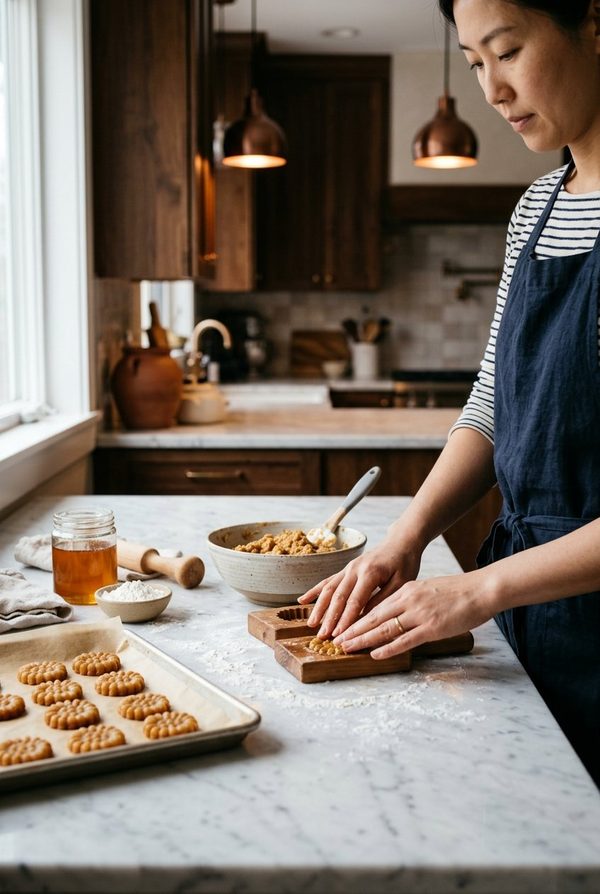
Step 4: Roll and cut. Roll the dough out to about half an inch thick. Traditional yakgwa are cut into flower shapes with a cookie cutter, which is part of what makes them so beautiful on a plate. If you don’t have a flower cutter, a small round cutter or even a sharp knife to cut squares works fine. The shape doesn’t affect the taste, and honestly a little imperfection gives them character. Press a small hole in the center of each cookie if you’re going traditional — it helps the dough fry more evenly all the way through.
Step 5: Heat the oil. Pour enough vegetable oil into a deep frying pan or pot to submerge the cookies. Heat it over medium heat to around 300-320°F (150-160°C). This is lower than most frying temperatures, and that’s intentional. Yakgwa need to fry slowly so the honey in the dough doesn’t burn before the inside cooks through. A candy or frying thermometer helps a lot here. If you don’t have one, drop a tiny piece of dough in the oil — it should sink briefly, then float and sizzle gently. If it browns in under 30 seconds, your oil’s too hot.
Step 6: Fry in batches. Add the cookies to the oil in small batches, leaving space between them so they don’t stick together. They’ll sink a little at first, then float as they cook. Fry for about 10-15 minutes, turning them occasionally with tongs or a slotted spoon so all sides turn evenly golden brown. They should end up a deep amber color, not pale and not dark. The frying time feels long, but remember — lower temperature means slower cooking, and that’s what gives you that chewy interior. Rushing the oil temperature is the most common mistake people make with yakgwa, and it almost always results in cookies that are raw inside or burnt outside.
Step 7: Drain and soak. Lift the cookies out with a slotted spoon and let them drain on paper towels for a couple of minutes. If you want the more traditional sticky, shiny finish, you can make a quick honey syrup by warming additional honey with a splash of water over low heat and briefly dipping the hot cookies in it before they cool. The honey soaks into the outside and makes them glisten. This step is optional but I always do it — it’s what makes them look like they came from a proper Korean kitchen.
Step 8: Cool completely. Spread the cookies on a wire rack or clean plate and let them rest for at least 15 minutes. They firm up as they cool and the texture goes from soft and a little floppy to that signature dense, slightly chewy bite. This is the step where they become yakgwa instead of just fried honey dough.
I make a batch of these whenever I’m doing other weekend baking. They don’t require the same kind of attention as something like a easy french toast casserole, and having a plate of them on the counter makes the whole kitchen smell like a holiday.
Leftovers and Reheating
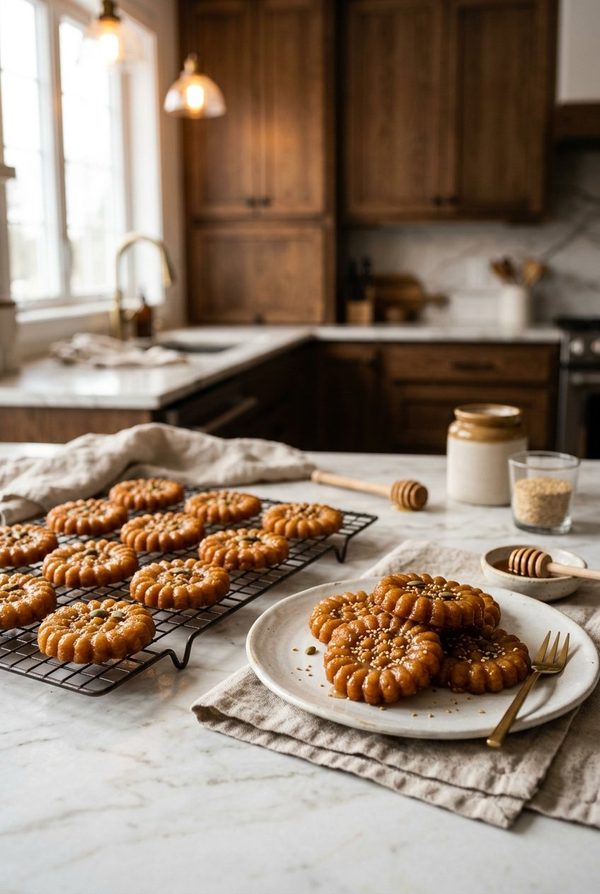
Store yakgwa in an airtight container at room temperature. They’ll keep well for up to a week and honestly get better after a day or two as the honey settles deeper into the cookies.
For longer storage, freeze them in a single layer on a baking sheet first, then transfer to a zip-top bag. They freeze well for up to three months. Thaw at room temperature for an hour or so before eating.
If they’ve softened and you want to bring back a little of the exterior texture, put them on a baking sheet in a 300°F oven for five to eight minutes. They won’t get exactly as crisp as fresh, but they warm up nicely and the honey aroma comes back strong.
Recipe Card
Yakgwa (Korean Honey Cookies)
- Prep Time: 20 minutes
- Cook Time: 15 minutes
- Total Time: 35 minutes
- Servings: 6
Ingredients:
- 3 cups all-purpose flour
- 1 cup honey
- 1/2 cup sesame oil
- 3 tablespoons rice wine
- 1/2 teaspoon cinnamon powder
- 1/2 teaspoon ginger powder
- Vegetable oil, for frying
Instructions:
- Whisk together honey, sesame oil, cinnamon, and ginger in a large bowl until smooth.
- Stir in rice wine, then add flour one cup at a time, mixing until a dough forms.
- Knead on a lightly floured surface for 3-4 minutes until smooth and elastic.
- Roll dough to 1/2-inch thickness and cut into shapes with a cookie cutter or knife.
- Heat vegetable oil in a deep pan to 300-320°F over medium heat.
- Fry cookies in batches for 10-15 minutes, turning occasionally, until deep golden brown.
- Drain on paper towels. Optionally dip in warm honey syrup while still hot.
- Cool on a wire rack for at least 15 minutes before serving.
FAQ
Can I make yakgwa without sesame oil?
Technically yes, but they won’t taste like yakgwa. Sesame oil is what creates that distinctive warm, nutty aroma that defines the cookie. A neutral oil will give you a fried honey cookie, which is fine, but it’s a different thing. If you want to stretch your sesame oil, you can use half sesame and half neutral oil — the flavor will be more subtle but still present.
Why do my yakgwa come out hard instead of chewy?
Usually this means the dough was overworked or the oil was too hot. Overworking builds too much gluten, which tightens the dough and gives you a tough cookie instead of a tender one. Oil that’s too hot fries the outside before the inside has time to fully cook through, which also affects texture. Keep your oil at 300-320°F and stop kneading as soon as the dough is smooth.
What does yakgwa actually taste like?
They’re sweet from the honey, with a warm spiced note from the cinnamon and ginger, and a savory-nutty undertone from the sesame oil. The texture is dense and slightly chewy — not crispy like a Western cookie, but not soft either. They’re somewhere in between, which is what makes them so satisfying. If you like no-bake peanut butter cookies or panera shortbread cookies, you’ll appreciate how different yakgwa are — it’s a whole different flavor profile, rooted in centuries of Korean baking tradition.
These cookies have been a quiet regular in my kitchen ever since that restaurant dinner. They don’t need a special occasion, though they’d be perfect for one. Make them on a Sunday afternoon, let them cool while you do something else, and then eat one standing over the kitchen counter like I always do. Worth every minute.