
It was one of those gray Saturday mornings in January where the cold just sits on everything. I woke up before anyone else, which almost never happens, and the apartment was completely silent. No cartoons, no tiny feet on the floor, just me and the kitchen. I stood there with my coffee looking out the window at nothing, and I had this sudden urge to make something warm and sweet and ridiculous for breakfast. Something that would fill the whole place with that cinnamon smell and make everyone come wandering out of bed like something pulled them there.
I’d been meaning to try a baked French toast for months. My mom used to do a version of it on Sunday mornings when I was growing up, except she’d stand at the stove flipping individual slices while we all sat there waiting and she’d get more and more annoyed. I wanted that same flavor but without the standing-over-the-stove part. So I pulled out a loaf of French bread that was a day old and getting stale, cracked some eggs, and just went for it.
When that casserole came out of the oven 30 minutes later, the top was golden and puffed up, the edges were caramelized and crispy, and the whole kitchen smelled like a bakery. My daughter walked in, climbed up on her chair, and said “I want that” before I even cut it. Alex grabbed a fork straight from the drawer. No plate. Just a fork and the corner of the pan. That was the moment I knew this one was staying in the rotation.
I’ve made it probably fifteen times since then. Holiday mornings, random weekends, once on a Wednesday because I had leftover bread and felt like it. It’s the kind of breakfast that feels special but takes maybe ten minutes to throw together the night before. You just bake it in the morning while you’re still half asleep.
A Few Things Before You Start
The bread is everything here. You want French bread or a good challah, and it needs to be at least a day old. Fresh bread soaks up the custard and turns into mush. Stale bread holds its shape, absorbs the egg mixture slowly, and gives you that perfect balance of custardy interior and slightly crispy top. If your bread is fresh, cut it into cubes and spread them on a baking sheet for a couple hours, or pop them in the oven at 200F for 10 minutes. That dries them out enough to work.
The brown sugar and butter base on the bottom of the pan is what sets this apart from regular French toast. It melts during baking and creates this sticky caramel layer that coats the bottom of every piece. Don’t skip it. You could leave it out and still have decent French toast casserole, but you’d be missing the best part (trust me on this one).
For the custard, whole milk gives you the richest result. I’ve tried it with 2% and it was fine, but the texture wasn’t quite as creamy. Half-and-half works if you want to go richer. Skim milk is the one I’d avoid. The vanilla extract makes a real difference too. Use the real stuff, not imitation. You can smell the difference the second it hits the bowl.
One more thing. You can absolutely assemble this the night before. Cover it with plastic wrap, put it in the fridge, and bake it in the morning. I actually prefer it that way because the bread has all night to soak up the custard. Just add about 5 extra minutes to the bake time since it’s going in cold.
Ingredients
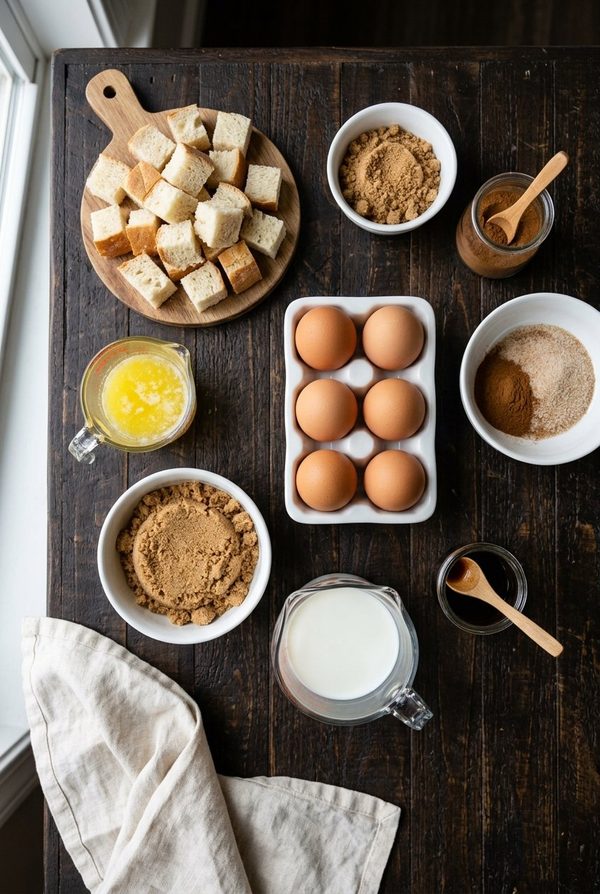
| Ingredient | Amount |
|---|---|
| French bread, cut into 1-inch cubes | 8 ounces (about half a loaf) |
| Unsalted butter, melted | 1/2 cup |
| Brown sugar, packed | 1 cup |
| Large eggs | 5 |
| Whole milk | 2 cups |
| Vanilla extract | 2 1/2 teaspoons |
| Ground cinnamon, divided | 3 teaspoons total |
| Brown sugar for topping | 1 1/2 tablespoons |
You can also throw in some extras. Fresh blueberries or sliced strawberries scattered over the bread before pouring the custard are wonderful. Chopped pecans on top give you a nice crunch. A handful of chocolate chips turns it into something my daughter requests by name. Keep the add-ins to about half a cup total so they don’t weigh the casserole down.
The Method
Step 1: Get your pan ready and build the caramel base.
Preheat your oven to 425F (220C). Grab a 13×9-inch baking dish and grease it lightly with butter or cooking spray. Now melt the half cup of butter in a small saucepan over medium heat. Once it’s fully melted, add the cup of packed brown sugar and stir it around for about a minute until the sugar dissolves into the butter and you’ve got a smooth, pourable caramel. It won’t be thick like candy. It’ll be loose and syrupy. That’s exactly right. Pour it into the bottom of your baking dish and tilt the pan so it spreads into an even layer. This layer is going to bubble and caramelize under the bread while it bakes, and it’s honestly what makes this casserole taste like something from a restaurant.
Step 2: Layer in the bread cubes.

Spread your bread cubes evenly over the caramel layer. You want a single-ish layer, not a huge pile. Some pieces will overlap and that’s fine, but try to keep it relatively even so every piece gets contact with both the caramel below and the custard you’re about to pour on top. Press the bread gently into the caramel so the bottom pieces start absorbing it. Don’t smash them flat. Just a light press.
Step 3: Mix and pour the custard.
In a medium bowl, crack your five eggs and whisk them until the yolks and whites are fully combined. Add the milk, vanilla extract, and one teaspoon of the cinnamon. Whisk it all together until it’s smooth with no streaks of egg white visible. Pour this mixture slowly and evenly over the bread cubes. Go back and forth across the pan so every section gets some custard. Then take a spatula or your hands and gently push any dry bread pieces down into the liquid so they start soaking. Every piece of bread should be at least partially submerged. Let it sit for about 10 minutes if you’re baking right away. The bread needs time to drink up that custard.
If you’re making this the night before, this is where you’d cover it and refrigerate it. The overnight soak is even better. I’ve tested both ways side by side, and the overnight version had a more even, creamier texture throughout.
Step 4: Add the topping and bake.
Sprinkle the remaining two teaspoons of cinnamon over the top of the casserole. Then scatter the 1 1/2 tablespoons of brown sugar over everything. This gives you a lightly spiced, slightly crunchy top layer that contrasts with the soft custard underneath.
Slide the pan into your preheated oven and bake for 25 to 30 minutes. You’re watching for a few things: the top should be golden brown, the edges should be darker and slightly pulling away from the sides of the pan, and the center should be puffed up and feel firm when you press it lightly. It’ll still have a tiny bit of jiggle, and that’s OK. It sets up more as it cools.
Step 5: Rest and serve.
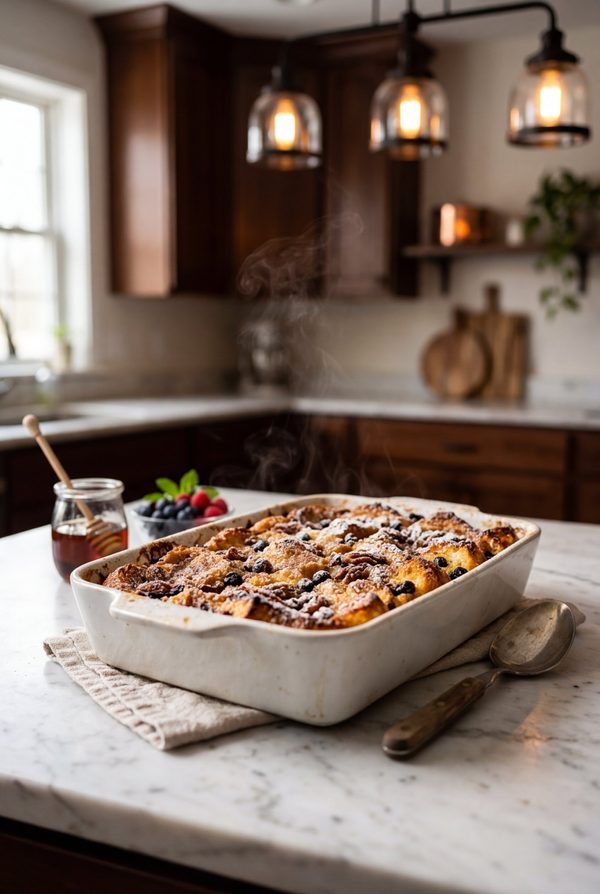
Pull it out and let it sit on a cooling rack for about five minutes. This is hard because it smells unreal at this point, but the resting time lets the custard firm up so your slices actually hold together instead of falling apart on the plate. Dust the top with powdered sugar if you want that bakery look, or just serve it as is. A drizzle of maple syrup and some fresh berries on the side is how I like it best.
If you’re doing a full brunch spread, this pairs really well with something savory to balance all that sweetness. My hashbrown breakfast casserole is the one I make alongside it most often. Eggs, cheese, potatoes, sausage. It covers the savory side while the French toast handles dessert-for-breakfast duty.
Leftovers and Reheating
This stores well in the fridge for up to 3 days in an airtight container. Reheat individual portions in the oven at 350F for 10 to 12 minutes, or microwave for about 60 to 90 seconds. The oven keeps the top a little crispy. The microwave makes it softer but it’s faster and still tastes good.
You can freeze it too. Cut it into individual portions, wrap each one in plastic wrap, then put them all in a freezer bag. They’ll keep for up to 2 months. Reheat from frozen in the oven at 350F for about 25 minutes. I usually make a double batch and freeze half for those mornings when I want something good but don’t want to do anything.
Recipe Card
Easy French Toast Casserole
A custardy, cinnamon-spiced baked French toast with a sticky brown sugar caramel base. Prep it the night before and just bake in the morning.
- Prep Time: 15 minutes (plus optional overnight soak)
- Cook Time: 25-30 minutes
- Total Time: 40-45 minutes
- Servings: 8
- Calories per serving: ~320
Ingredients
- 8 ounces French bread, cut into 1-inch cubes (about half a loaf)
- 1/2 cup unsalted butter, melted
- 1 cup brown sugar, packed
- 5 large eggs
- 2 cups whole milk
- 2 1/2 teaspoons vanilla extract
- 3 teaspoons ground cinnamon, divided
- 1 1/2 tablespoons brown sugar for topping
- Optional: powdered sugar, fresh berries, maple syrup for serving
Instructions
- Preheat oven to 425F (220C). Grease a 13×9-inch baking dish.
- Melt butter in a saucepan, stir in 1 cup brown sugar until dissolved. Pour into baking dish and spread evenly.
- Layer bread cubes over the caramel base. Press gently.
- Whisk eggs, milk, vanilla, and 1 teaspoon cinnamon. Pour evenly over bread. Let soak 10 minutes (or refrigerate overnight).
- Sprinkle remaining 2 teaspoons cinnamon and 1 1/2 tablespoons brown sugar over top.
- Bake 25-30 minutes until golden brown, puffed, and firm in the center.
- Rest 5 minutes before serving. Top with powdered sugar, berries, or maple syrup.
Nutrition (per serving)
| Calories | ~320 |
|---|---|
| Servings | 8 |
FAQ
Can I use regular sandwich bread instead of French bread?
You can, but the texture won’t be the same. Sandwich bread is thinner and softer, so it breaks down more during soaking. If that’s what you’ve got, use a thick-sliced variety like Texas toast and cut the soak time shorter. Brioche and challah are the best swaps if you can find them. Both soak up custard beautifully without falling apart.
Does this work as a make-ahead breakfast?
It’s honestly better that way. Assemble the whole thing the night before, cover it tightly, and refrigerate. The overnight soak means every piece of bread is evenly saturated with custard, and you get a creamier, more consistent result. Just add 5 extra minutes to your bake time in the morning since it’s going in cold from the fridge.
How do I know when it’s done baking?
Look for three things: golden brown color on top, edges that are slightly darker and pulling away from the pan, and a center that’s puffed up and feels firm when you press it. A little bit of jiggle in the very center is fine. It keeps cooking as it rests.
That first Saturday morning I made this, we sat around the table for almost an hour. Nobody was in a rush. My daughter had powdered sugar on her nose and was dipping each bite into a puddle of maple syrup like it was a science experiment. Alex went back for thirds. I just sat there with my coffee, watching them, thinking this is exactly why I cook.
If you’re the kind of person who thinks breakfast should feel like a little bit of a celebration, this is the recipe. And when the weather gets colder and you want something that fills up both the kitchen and the people in it, my butternut squash casserole does the same thing on the savory side. For something sweet to round out the weekend, those no-bake peanut butter cookies take about ten minutes and my daughter helps make them every time.
Put this one in your back pocket for the next cold Saturday morning. You won’t regret it.